Die cutting
We offer custom high-precision die cutting solutions that help streamline your production processes and reduce your product cost.
Any conceivable shape or size
We can die cut all possible sizes up to 320 mm of width and 320 mm of length per piece.

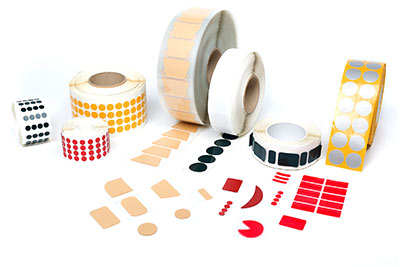
As individual pieces, in rolls, or on sheets
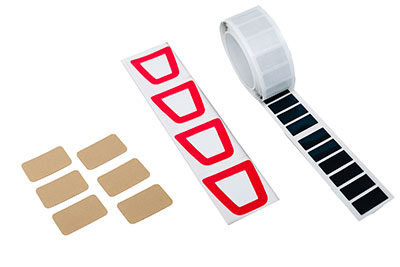
Butt-Cut: a continuous row of rectangular or square elements without gaps, placed on a liner.
Individual die-cut shapes in a roll: separate elements arranged in roll format on a liner.
Sliced products: elements supplied individually, not in a roll.
Small and large series production
Flatbed die-cutting enables small, medium, or large production runs with moderate tooling costs. It is also suitable for processing materials thicker than those that can be handled by rotary cutting.
Rotary die-cutting is ideal for complex shapes and high-volume production, efficiently complementing flat cutting.
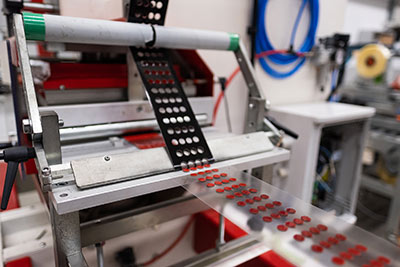
Expertise
Our specialists provide consultation on design, prototyping, and manufacturing, helping you find the optimum solution for your requirements.

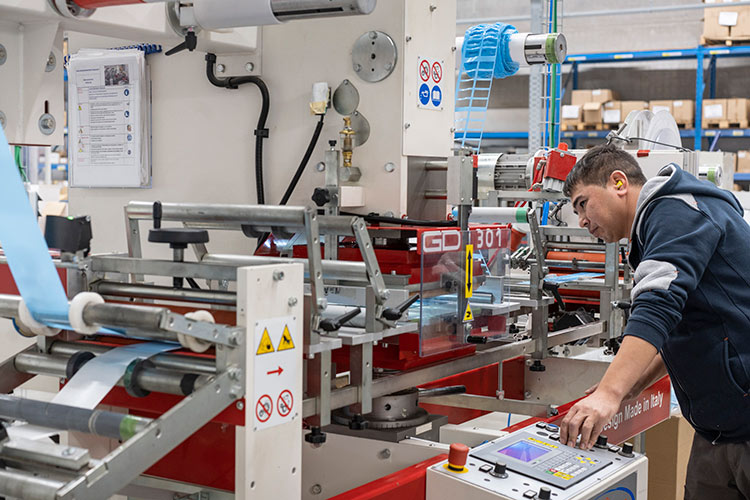
Technologies
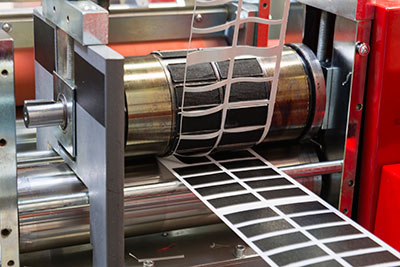
Rotary die-cutting
This process involves a cylindrical die mounted on a rotary press. Material is fed through the press as the die rotates, enabling punching, perforation, or cutting into parts. Engraved (most precise) or adjustable cylindrical dies are used, depending on production needs.
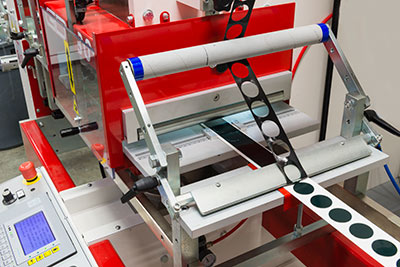
Flatbed die-cutting
The flat press delivers pressure from 10 tons, making it suitable for thick or rigid materials and short to medium runs. Dies made from plywood or steel are less expensive than cylindrical tools—ideal for small series, where rotary tooling would not be cost-effective.